
Himba Tribe Traditions – Family & Cultural Norms in Namibia

Quick answer
The main Himba tribe traditions are red otjize paste on skin and hair, cattle herding, polygamy, hairstyles that show age and marital status, and ancestor worship. Each person belongs to two clans: the father's (oruzo) and the mother's (eanda). A holy fire, the okuruwo, sits at the centre of the homestead.
The Himba tribe of Namibia keeps strong cultural traditions tied to their semi-nomadic lifestyle, cattle herding, and unique practices like using red ochre on their bodies and hair, polygamous marriages, and honoring their ancestors.
The Himba follow a system where social rank comes from the father’s side, while wealth is passed down through the mother’s side, usually from the maternal uncle to his nephew.
Each person belongs to both their father’s clan (Oruzo) and their mother’s clan (Eanda). This system is rare in many cultures.
Extended family living is common among the Himba. Although each woman has her own hut, polygamy is practiced, and women often live together in the same homestead.
After marriage, women move to live with their husband’s family but may visit their own relatives or return home if divorced.
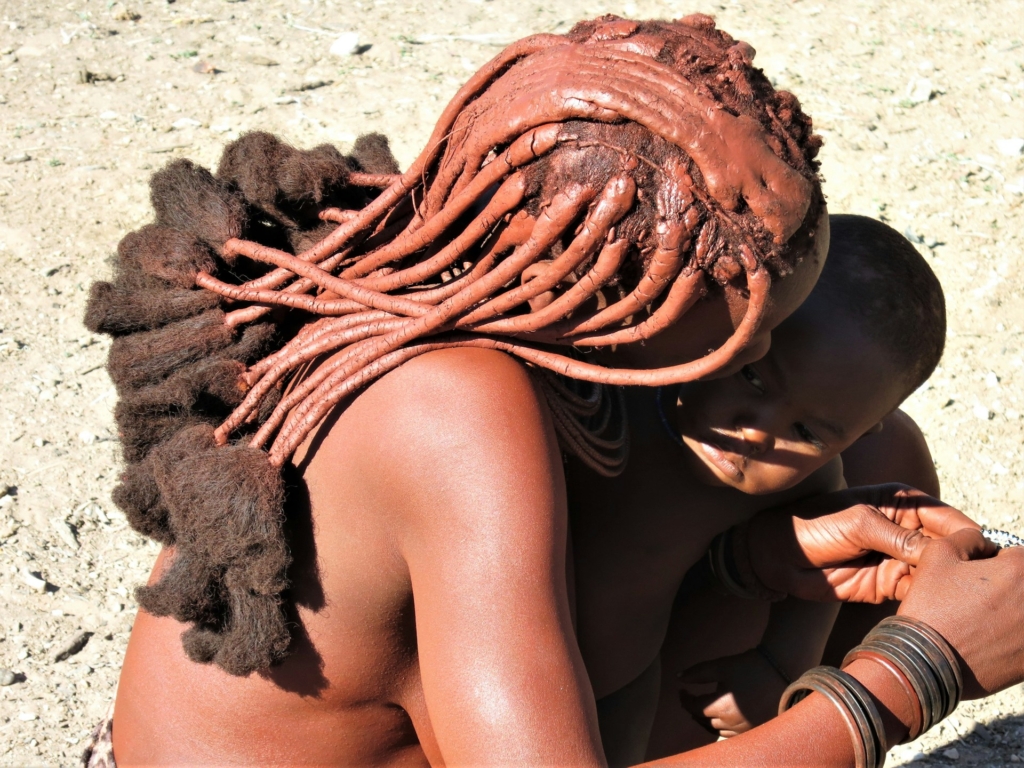
Women apply a mix of butterfat and ochre to their skin and hair, which protects them from the sun and is a sign of beauty and fertility.
Polygamy is common, with men having more than one wife. Marriages are often arranged by parents, and children may be promised to each other while young, but they only live together when they reach puberty.
Detailed hairstyles, including braids, show a person’s age and marital status. Women wear rings around their necks, and married men also wear rings.
Cattle are very important in Himba culture, showing wealth and status, and are central to their economy and diet, along with milk and some crops.
Although Himba women do not bathe with water, they maintain cleanliness by taking daily smoke baths using herbs and ashes, which also give them their unique scent.
The Himba follow a spiritual system based on ancestor worship and the god Mukuru. They perform rituals to honor and seek guidance from their ancestors.
Before puberty, boys are circumcised. Himba families live in round homes made of wood, mud, and dung, with a central fire (okuruwo) that has spiritual meaning. Boys and girls are given different roles in helping raise younger children.
According to a Himba tradition called okujepisa omukazendu, a guest may be offered the wife of the host as a sign of hospitality, but the woman must agree first.
Frequently asked questions
What are the two Himba clans?
Every Himba belongs to the father's clan (oruzo) and the mother's clan (eanda). Social rank comes from the father's side and wealth from the mother's side.
What do Himba hairstyles mean?
Braids and hairstyles show a person's age and whether they are married.
What religion do the Himba follow?
They practise ancestor worship and believe in the god Mukuru. The holy fire, okuruwo, links the family to the ancestors.
Do Himba women bathe?
Not with water. They take daily smoke baths with herbs, which also give them their scent.


