
Otjize: Why Himba Women Wear Red Ochre in Namibia

Quick answer
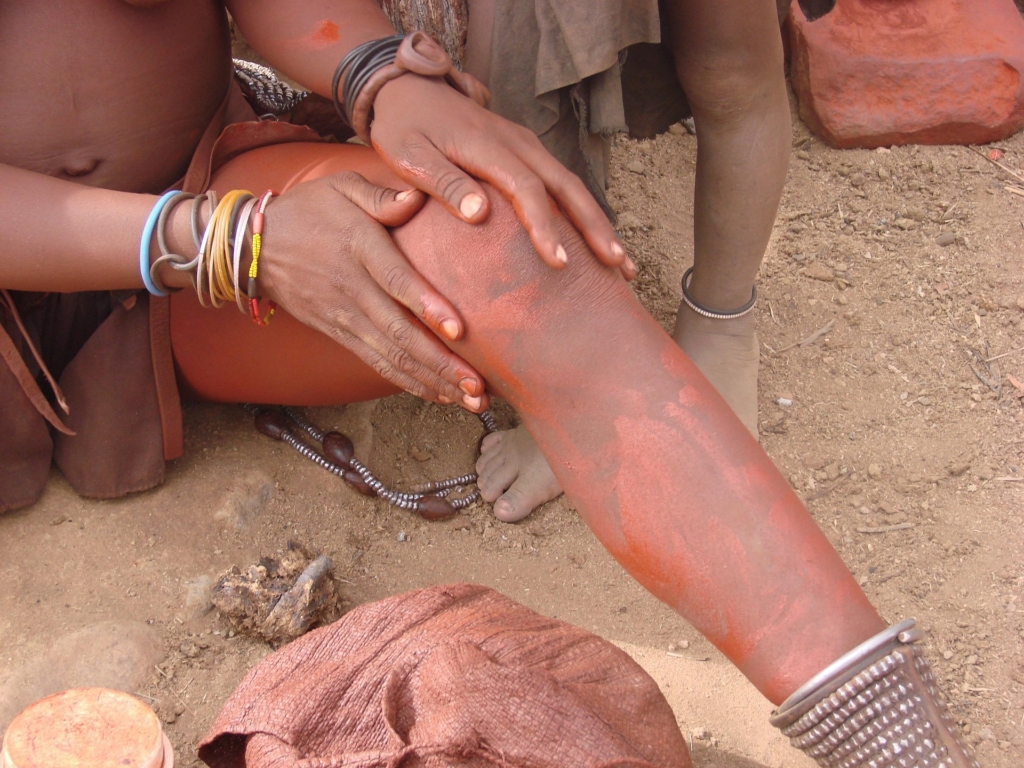
Otjize is a paste of butter fat and red ochre, sometimes mixed with scented resin, that Himba women apply to their skin and hair every morning. The Himba say they wear it for beauty. It also protects the skin from sun and dry air. Men do not wear otjize.
Tourists have long been drawn to Namibia’s dry northwest by the Himba, an ancient group of semi-nomadic herders. Because of this, the image of the Himba, if not their name, is known far beyond the remote and harsh Kunene region where they live and care for their livestock.
This is mainly because Himba women apply otjize, a paste made from butter, lard, and red ochre, sometimes mixed with scented resin, to their skin and hair each morning. This gives them their well-known red color. Seeing traditional Himba women has become a symbol of Africa.
There has been much debate about the reasons for this practice. Some people believe it is to keep away insects or to protect their skin from the sun. However, the Himba say it is simply for beauty, like traditional makeup they put on when they wake up each day. Men do not use otjize. It is seen as a practice for women, connected to beauty, and is reserved for them.
Many Himba continue to live a traditional lifestyle that has survived conflicts and droughts for generations, even though it is often threatened by development, such as planned hydropower projects.
These traditions are still followed in the village of Omarumba, where Chief Hikuminue Kapika leads a community of about 20 people. The Himba welcome visitors to see their way of life, but they ask for a donation in return. This donation is usually $25, maize, coffee, tea, and cooking oil.
Frequently asked questions
What is otjize made of?
Butter fat, ground red ochre and sometimes scented resin.
Why do Himba women wear otjize?
The Himba say it is for beauty, like daily make-up. It also protects the skin from the sun and dry air.
Do Himba men wear otjize?
No. Otjize is worn by women.
Can I see otjize being made?
Yes. On a guided village visit you can often watch women prepare otjize.


