
Himba History, Traditions & Culture in Namibia’s Kunene Region

Quick answer
The Himba descend from Herero people who moved from Angola to Kaokoland, now the Kunene Region, around the mid-16th century. They became a separate group in the late 19th century after cattle disease changed how they lived. They survived the German colonial genocide of the early 1900s and opposed a planned hydroelectric dam in the 1980s.
The Himba are an indigenous ethnic group from the Kunene Region of southern Angola and northern Namibia. They are closely related to the Herero and are believed to have moved from Angola in the sixteenth century.
Their history shows their ability to adapt, their strength, and their commitment to keeping their traditional semi-nomadic lifestyle, which is centered around livestock and a strong connection to their land and culture.
The Himba come from the Herero people who moved to Namibia from Angola around the mid-16th century. They first settled in Kaokoland, which is now called the Kunene Region.
A key moment in their history was when they separated from the Herero in the late 19th century, mainly because a cattle disease forced them to find different ways to survive, which led to a unique Himba identity.
The Himba have faced many challenges, including a serious cattle disease and the German colonial genocide in the early 1900s, but they have managed to keep their traditions and way of life. They also worked to protect their ancestral lands from threats like the planned hydroelectric dam in the 1980s.
Their culture and economy are closely linked to livestock, especially cattle, which are important for food and social status. The Himba are semi-nomadic, moving to find water and grazing land.
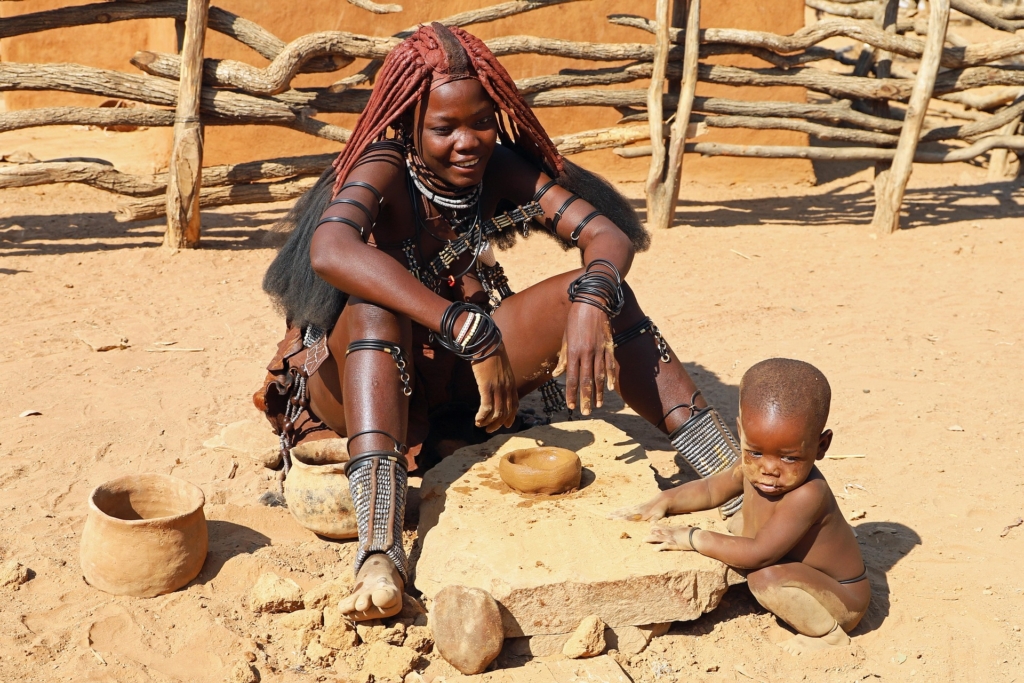
The Himba are known for using red ochre body paint called otjize and for their detailed hairstyles, which are important to their cultural identity and beauty. They also honor their ancestors and worship a god named Mukuru along with their clan’s ancestors.
The Himba have a system where people belong to two clans: a patriclan (oruzo) and a matriclan (eanda). Inheritance and family responsibilities are passed down through the mother’s clan.
While the Himba are proud of their traditions, they also face the challenges of modern life and are working to protect their way of life while engaging with the modern world when needed.
Frequently asked questions
Where did the Himba come from?
From southern Angola. They are related to the Herero, who moved into Namibia around the mid-1500s.
When did the Himba split from the Herero?
In the late 19th century, mainly after cattle disease forced them to find new ways to survive.
What god do the Himba worship?
Mukuru, together with their clan ancestors.


